

In rapidly developing cities like Lucknow, hospitals and surgical centres are recognising the critical importance of advanced infrastructure to ensure patient safety, reduce infection risks, and deliver high-quality surgical outcomes. Among the most important facilities in a hospital is the operating theatre – and increasingly, institutions are moving away from conventional construction toward advanced modular operating theatres (OTs). These prefabricated, high-performance surgical environments are engineered for sterility, workflow optimisation and regulatory compliance.
Given the complexity of modern surgery and rising expectations around infection control and patient safety, there’s no room for compromise. In this blog, we’ll explore the key safety and sterility standards that must guide the design, installation and ongoing operation of a modular OT in Lucknow (and comparable environments), covering zoning, air handling, material finishes, sterilisation flows, monitoring and maintenance. Understanding these benchmark standards allows hospital administrators, architects, and clinicians to make informed decisions and ensure that the surgical suite truly supports optimal outcomes.
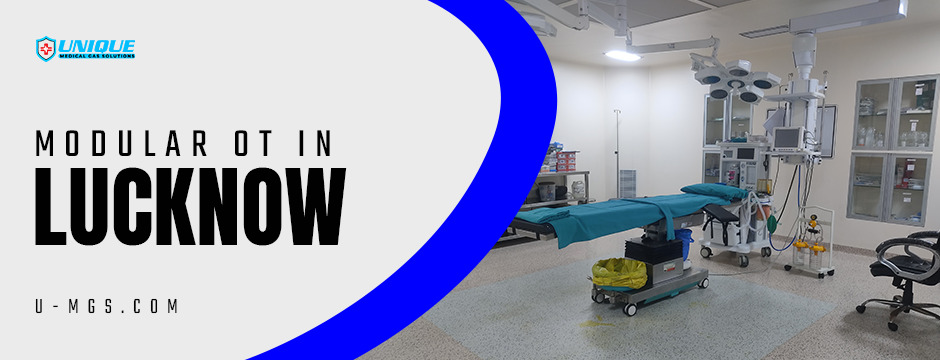
Key Safety & Sterility Standards to Implement Modular OT
Zoning of the OT Area
One of the foremost requirements under standards such as those set out by the National Accreditation Board for Hospitals & Healthcare Providers (NABH) and other guidelines is proper zoning: unrestricted, semi-restricted and restricted zones (clean areas, scrub zones, sterile zones). In modular OTs, this means:
- Clear demarcation of scrub/hand-wash area, sterile operating field, equipment storage, and “dirty” utility or disposal zones.
- Controlled access: only authorised staff enter the restricted zone; boots, hats, gowns and masks may be mandated.
- Traffic flow is designed to prevent contamination: sterile flows in, waste flows out, with minimal cross-traffic.
This zoning is foundational: if traffic flow is uncontrolled, even the best engineering may not prevent infection or contamination.
Air Handling, Filtration & Pressure Control
Air quality in the OT is a serious determinant of surgical site infection risk, especially in higher-risk surgeries. For modular OTs, standards typically include:
- Use of HEPA (High Efficiency Particulate Air) filters and laminar (or unidirectional) airflow systems to ensure clean-air delivery and removal of particulates.
- Minimum air changes per hour (ACH) of ~20 or higher, depending on classification. The fresh air component is also specified (e.g., at least 4 fresh air changes out of 20).
- Positive pressure differential between OT and adjoining areas (to prevent inward airflow from corridors). For example, a minimum of ~2.5 Pa positive pressure.
- Temperature and humidity control: e.g., around 21 °C (±3 °C), humidity 20-60% or as advised.
In the context of Lucknow’s hot and humid climate, maintaining consistent air-conditioning and filtration becomes even more important. Modular OTs must therefore integrate robust HVAC, ducting and monitoring systems, and facility managers must allow for regular maintenance, filter change-outs and validation testing.
Material Finishes, Surfaces & Workflow Design
To support sterility, the construction materials and surfaces used in the Best Modular OT India must adhere to strict criteria:
- Wall, ceiling and panel finishes must be continuous, non-porous, seamless and easy to disinfect (e.g., stainless steel panels, epoxy-coated surfaces, antibacterial paint).
- Flooring must be anti-static, seamless, moisture-resistant and suitable for heavy cleaning.
- Doors should be hermetically sealed, often automatic sliding, with minimal gaps and a supreme hygiene design.
- The layout must allow for equipment pendants, surgical lights, cables and instrumentation to be overhead or out of traffic zones to reduce contamination risks.
Workflow must be optimised: scrub zone adjacent to restricted area, utilities accessible but separate from sterile zone, equipment storage away from patient-air flow path. In modular OTs, this is simpler to design because components are engineered rather than retrofitted.
Instrument Sterilisation & Support Utilities
Sterile supplies and instrument processing are integral to OT safety. Key considerations:
- The modular OT should connect or be adjacent to a Central Sterile Supply Department (CSSD) with clear flows (from dirty to clean) and separation from the operating environment.
- Medical gas pipelines, vacuum systems, lighting control, and power backup must be integrated within the modular build. This reduces the risk of ad-hoc additions that compromise sterility or airflow.
- Sterilisation of instruments and disposables must be documented and logs maintained; surfaces and airflow validation are critical for re-use zones.
Monitoring, Validation & Maintenance
Even the best design is only as good as the ongoing monitoring and maintenance. Key practices:
- Routine testing of air velocity, number of air changes, HEPA filter integrity, pressure differentials, and particle counts (non-viable and viable) should be carried out.
- Cleaning schedules, preventive maintenance of HVAC and filters, calibration of airflow equipment, and land logs for sterile maintenance must be implemented.
- Staff training on operating within a modular OT environment (infection control, gowning protocols, traffic flow) is central. Also, emergency protocols (power failure, HVAC failure, fire) should be in place.
Localised Considerations in Lucknow
When planning or operating a modular OT in Lucknow, additional factors should be factored in:
- Climate control challenges: Lucknow’s summer heat and monsoon humidity demand robust HVAC capacity and backup systems to maintain the required 21 ± 3 °C and humidity range.
- Power outages: Hospitals in many mid-sized Indian cities must plan for reliable UPS/generator systems; the modular OT’s equipment, lighting and HVAC cannot be compromised.
- Construction disruption: Modular OT installation means prefabrication and quicker onsite setup — vital in existing hospitals where downtime must be minimised.
- Regulatory compliance: Ensuring alignment with NABH guidelines and local health authority mandates is critical; modular build helps by standardising.
- Maintenance access: Given the rapid pace of installation in modular builds, ensure that service access (for filters, ducting, panels) is carefully planned; otherwise, downtime or risk of contamination increases.
Benefits of Upholding High Standards
By strictly implementing the above safety and sterility standards, hospitals and surgical centres benefit in multiple ways:
- Reduced surgical site infections (SSIs): Cleaner air, controlled traffic and better surfaces all reduce contamination risk, supporting better outcomes and fewer post-operative complications.
- Improved patient confidence and hospital reputation: Especially when patients (and families) increasingly prioritise safety, being able to market a “state-of-the-art modular OT” helps.
- Operational efficiency: Modular OTs are easier to maintain, clean and validate; downtime is lower, workflow smoother, and staff training more straightforward.
- Regulatory readiness: With proper design and validation, accreditation (e.g., NABH) is simplified, helping the hospital prepare for audits and inspections.
Scalability & Flexibility: Modular systems allow future expansion or retrofits without full rebuilds, which is beneficial in growing cities like Lucknow.
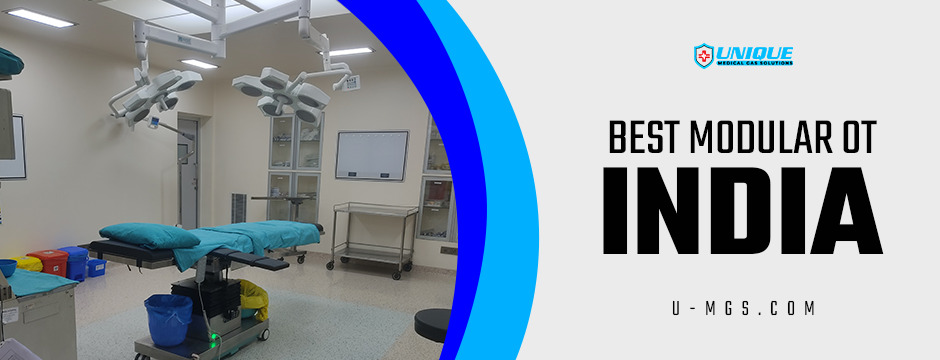
Wrapping Up
When it comes to surgical care in Lucknow, the quality of the operating theatre matters as much as the surgical team. A well-designed, properly maintained Modular OT in Lucknow delivers a sterile, efficient environment that supports patient safety, staff performance and hospital reputation. From zoning and airflow to materials, sterilisation flows, and monitoring, each element plays a pivotal role in safeguarding outcomes.
For healthcare facilities seeking to implement or upgrade a modular OT environment in Lucknow — and ensure that every procedure is conducted in a controlled, high-performance environment — partnering with a trusted, experienced provider is key. That’s why moving ahead with a specialist who understands local conditions, regulatory demands, and modular OT engineering is essential. To explore turnkey modular OT solutions tailored to your facility, visit Unique Medical Gas Solutions.


No comment