Medical Air vs. Compressed Air: Why Hospitals Need Separate Systems?
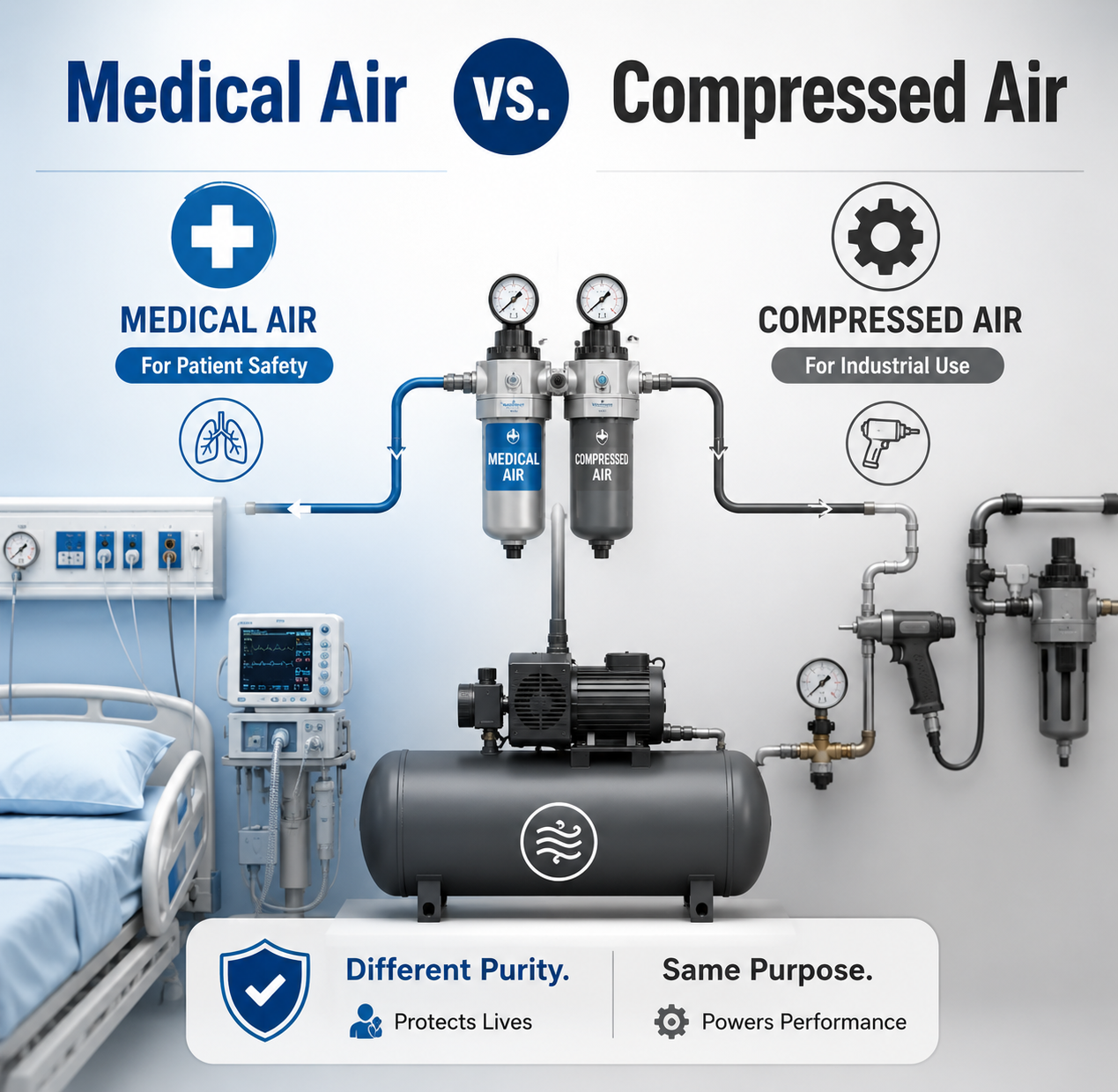
Air is one of the most critical utilities in any healthcare facility. From operating ventilators and anaesthesia machines to powering surgical instruments, hospitals rely on multiple air systems every minute. At first glance, medical air and compressed air may appear identical because both originate from atmospheric air and pass through compressors. However, they serve entirely different purposes and must meet different quality, safety, and regulatory requirements.
Using the same compressor for both applications could introduce contamination, equipment failure, and serious patient safety risks. Understanding the distinction between these two systems helps hospital administrators, biomedical engineers, and facility managers make informed decisions about medical gas infrastructure. This article explains why Medical Air vs. Compressed Air require separate systems and why hospitals cannot rely on a single compressor for both.
What Is Medical Air?
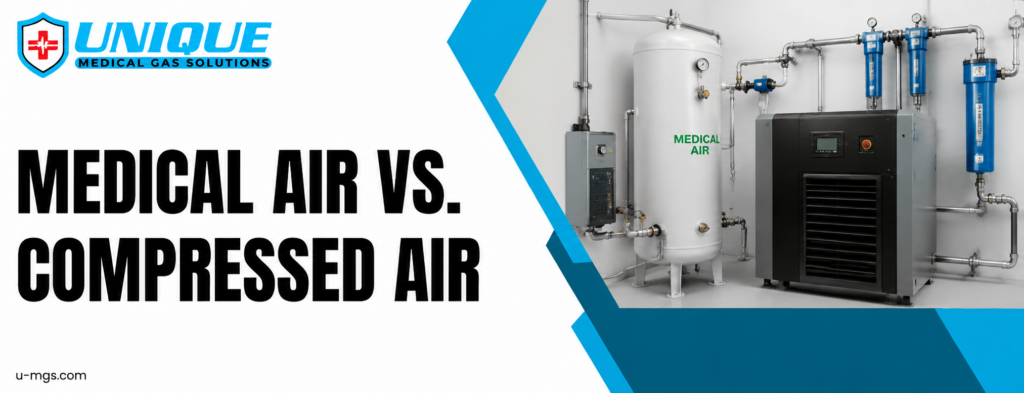
Medical air is a pharmaceutical-grade gas supplied through a dedicated medical gas pipeline system. It is produced by compressing atmospheric air, then removing contaminants such as:
- Oil
- Water vapor
- Dust particles
- Carbon monoxide
- Carbon dioxide (within specified limits)
- Microorganisms
- Odors
Unlike industrial compressed air, medical air is intended for direct patient use. Patients inhale this air during respiratory therapy, mechanical ventilation, anaesthesia, and intensive care procedures. Because it directly affects human health, medical air must meet strict purity standards established by healthcare regulations and pharmacopoeias.
What Is Compressed Air?
Compressed air is simply atmospheric air pressurised for mechanical work. It is widely used across industries for operating pneumatic tools, automation systems, packaging machinery, manufacturing equipment, and maintenance tasks.
Within hospitals, compressed air may also be used for:
- Pneumatic doors
- Laboratory equipment
- Maintenance workshops
- Instrument cleaning
- Utility applications
- Sterilisation support systems
Industrial compressed air does not necessarily require pharmaceutical-grade purity because it typically never comes into contact with patients.
The Biggest Difference: Patient Safety
The primary reason hospitals separate medical air from compressed air is patient safety.
- Medical air enters the patient’s lungs.
- Compressed air usually powers equipment.
If compressed air contains contaminants like lubricating oil, moisture, bacteria, or carbon monoxide, these substances could enter a patient’s respiratory system. Even tiny amounts of contamination may create severe complications for patients with compromised lung function.
For this reason, medical air systems are designed with multiple layers of purification, monitoring, and redundancy to maintain consistently safe air quality.
Why One Compressor Cannot Serve Both Systems?
Different Air Quality Standards
Medical air must comply with stringent healthcare quality standards.
Dedicated Medical Air vs. Compressed Air systems continuously remove:
- Oil aerosols
- Moisture
- Hydrocarbons
- Microbial contaminants
- Fine particulates
Industrial compressed air often follows manufacturing standards rather than medical-grade specifications. Even when clean enough for machinery, it may still be unsafe for patient respiration.
Risk of Cross-Contamination
Using one compressor for both hospital utilities and medical air increases the risk of contamination.
For example:
- Maintenance tools may introduce oil residues.
- Industrial piping may accumulate rust.
- Moisture can support bacterial growth.
- Dust particles may enter the distribution network.
Once contamination enters a shared system, it becomes extremely difficult to isolate affected areas.
Dedicated medical air systems eliminate this risk.
Different Distribution Networks
Medical air travels through specialised medical gas pipelines.
These pipelines include:
- Medical-grade copper tubing
- Alarm systems
- Pressure monitoring
- Emergency shutoff valves
- Zone isolation valves
- Backup supply systems
Utility compressed air generally uses conventional industrial piping that does not meet healthcare gas requirements.
Keeping both systems separate prevents accidental cross-connections and maintains system integrity.
Redundancy Is Mandatory
Hospitals cannot afford interruptions in medical air supply.
If a compressor fails while supporting ventilators or anaesthesia equipment, patient lives could be at risk.
Medical air systems therefore include:
- Multiple compressors
- Backup dryers
- Duplicate filtration units
- Automatic changeover systems
- Emergency alarms
Industrial compressed air systems often focus on operational efficiency rather than life-support reliability.
Healthcare standards require medical air systems to continue operating even if one compressor is out of service.
Moisture Control Matters
Excess moisture can cause:
- Corrosion
- Pipe damage
- Microbial growth
- Equipment malfunction
- Ice formation
- Reduced air quality
Medical air systems use advanced drying technologies to maintain extremely low moisture levels.
This protects both patients and expensive medical devices while ensuring long-term reliability.
Oil-Free Operation Is Essential
Many industrial compressors use lubricating oil during compression. Although filtration removes most oil, trace contamination may still occur if filtration systems fail or degrade.
Medical air compressors are commonly designed as oil-free systems or include extensive purification stages to ensure the delivered air remains free from harmful oil vapours. This significantly reduces the possibility of patient exposure to contaminants.
Continuous Monitoring Ensures Safety
Medical air systems are continuously monitored for quality and performance.
Typical monitoring includes:
- Pressure monitoring
- Dew point measurement
- Oxygen concentration
- Carbon monoxide detection
- Carbon dioxide monitoring
- Filter performance
- Compressor status alarms
Any abnormal reading immediately triggers an alert so corrective action can be taken before patient care is affected.
Industrial compressed air systems generally require far less continuous monitoring.
Different Applications Require Different Air
Medical Air Applications
Medical air supports:
- Mechanical ventilators
- Neonatal care
- Intensive care units
- Respiratory therapy
- Anesthesia delivery
- Patient breathing systems
- Medical device calibration
Every one of these applications directly affects patient health.
Compressed Air Applications
Compressed air commonly powers:
- Pneumatic surgical tools
- Maintenance equipment
- Laboratory automation
- Sterilization equipment
- Building management systems
- Air-powered instruments
Although these systems are important, they do not require patients to inhale the air itself.
Regulatory Compliance Is Non-Negotiable
Healthcare facilities operate under strict regulations governing MGPS in India.
These standards cover:
- Air purity
- Compressor installation
- Pipeline materials
- Alarm systems
- Maintenance schedules
- Backup equipment
- Testing procedures
- Documentation
Using one compressor for both medical air and industrial compressed air would make regulatory compliance extremely difficult and could expose hospitals to legal, financial, and patient safety risks.
Long-Term Cost Savings
Some organisations assume sharing compressors would reduce costs.
In reality, dedicated medical air systems help lower long-term expenses by:
- Preventing contamination incidents
- Reducing equipment failures
- Avoiding regulatory penalties
- Minimizing downtime
- Improving patient safety
- Extending equipment lifespan
The initial investment in separate systems is far less expensive than the potential costs associated with contamination or medical gas failures.
Best Practices for Hospitals
Hospitals should follow several best practices to maintain safe air systems:
- Install dedicated medical air compressors.
- Use oil-free compressor technology where appropriate.
- Perform routine air quality testing.
- Replace filters on schedule.
- Monitor dew point and contaminants continuously.
- Maintain redundant compressor systems.
- Train maintenance personnel on medical gas standards.
- Conduct regular inspections and preventive maintenance.
These practices help ensure uninterrupted, safe, and compliant operation.
End Notes
Although both Medical Air vs. Compressed Air originate from the same atmosphere, they serve entirely different purposes inside a hospital. Medical air is a life-support utility that patients breathe directly, while compressed air primarily powers equipment and facility operations. Because of the significant differences in purity requirements, contamination risks, monitoring, redundancy, and regulatory compliance, hospitals cannot safely use the same compressor for both systems.
Investing in dedicated medical air infrastructure is essential for protecting patients, supporting healthcare professionals, and maintaining operational reliability. If your healthcare facility is planning a new medical gas installation or upgrading an existing system, trusted specialists like Unique Medical Gas Solutions provide high-quality medical gas pipeline solutions designed to meet stringent healthcare standards.
FAQs
Hospitals cannot use the same compressor because medical air is directly inhaled by patients and must meet strict purity standards. Compressed air used for equipment may contain contaminants that are unsafe for respiratory use. Separate systems prevent cross-contamination and ensure compliance with healthcare regulations.
Yes. Medical air undergoes advanced filtration, drying, and continuous quality monitoring to remove contaminants such as oil, moisture, microorganisms, and harmful gases. Ordinary compressed air is generally intended for mechanical applications and does not meet medical-grade purity standards.
Medical air is commonly used in ventilators, anaesthesia machines, respiratory therapy devices, neonatal care units, intensive care units (ICUs), and other medical equipment where patients breathe the supplied air.
Oil-free compression minimises the risk of oil contamination reaching patients. Even trace amounts of oil vapours can compromise patient safety and damage sensitive medical equipment, making oil-free technology a preferred choice for medical air production.
Medical air systems should undergo regular preventive maintenance, including filter replacement, compressor inspection, air quality testing, moisture monitoring, and alarm verification. Maintenance schedules should follow healthcare standards and manufacturer recommendations to ensure safe operation.
RAG
Medical air is classified as a critical healthcare utility because patients breathe it during treatment. Unlike standard compressed air, it must pass through specialised filtration, drying, and monitoring systems to maintain pharmaceutical-grade purity. Hospitals also conduct routine inspections and air quality tests to ensure compliance with healthcare regulations. Maintaining these standards helps protect patients from airborne contaminants while ensuring reliable operation of life-support equipment and other respiratory care devices.
Dedicated medical air systems reduce the risk of contamination by separating patient air supplies from utility compressed air used for equipment. These systems incorporate backup compressors, pressure monitoring, alarm panels, and emergency controls to ensure uninterrupted operation. Such redundancy is especially important during surgeries, intensive care, and emergency treatments where a continuous supply of clean medical air is essential for patient safety and successful clinical outcomes.
Healthcare facilities should invest in high-quality medical gas infrastructure that complies with international safety standards and supports long-term operational reliability. A properly designed system includes oil-free compressors, medical-grade pipelines, advanced filtration, moisture control, and continuous monitoring. Working with Unique Medical Gas Solutions ensures hospitals receive dependable medical air solutions that enhance patient care, simplify maintenance, and support regulatory compliance throughout the facility’s lifecycle.