What Makes Modular OT in Kalyan Essential for Modern Operating Rooms?
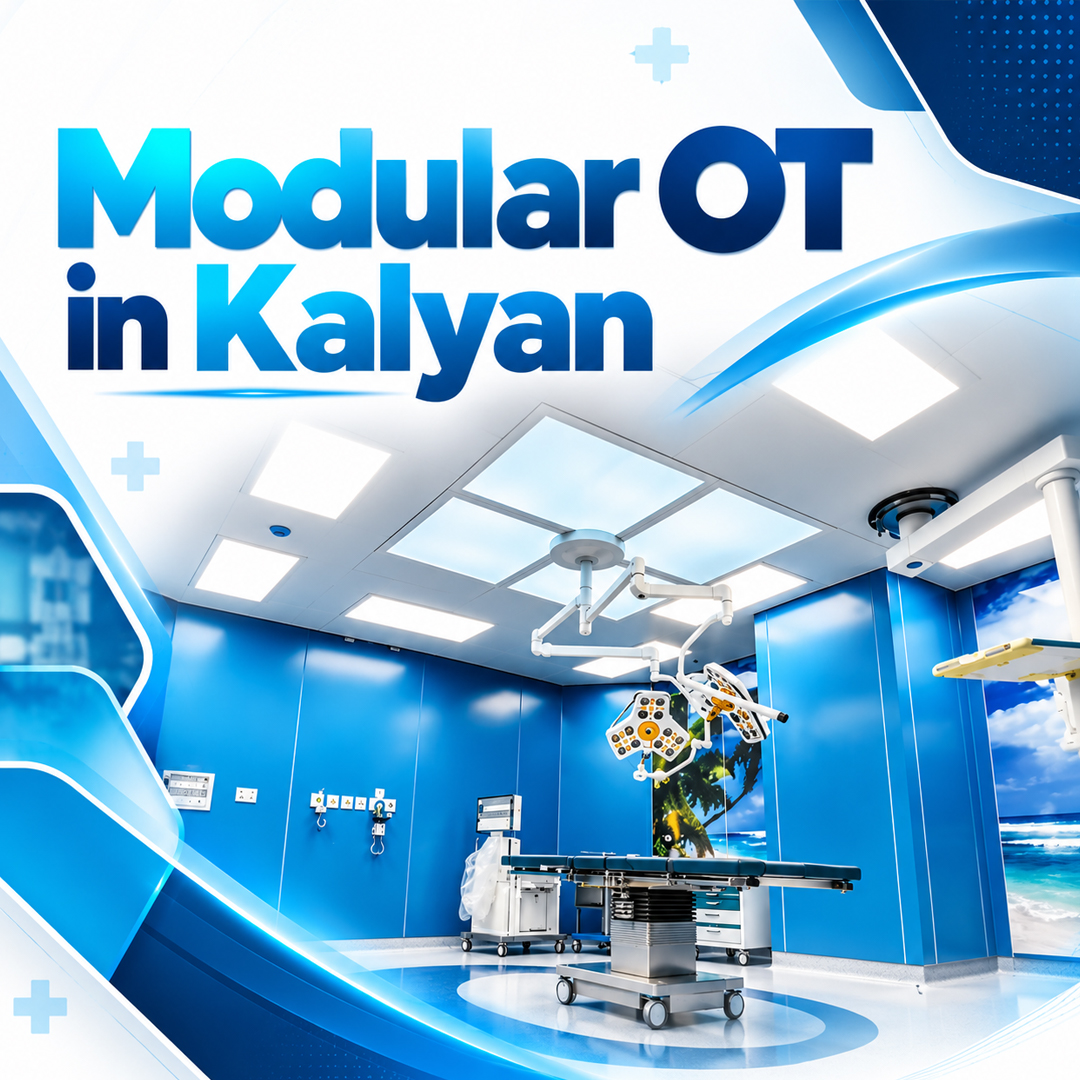
Modern operating rooms require more than advanced surgical equipment. They need a controlled, hygienic, and efficiently designed environment that supports patient safety and surgical precision. As healthcare facilities expand in Kalyan, modular operation theatres are becoming an important consideration for hospitals, multispecialty centres, and surgical clinics.
These systems integrate specialised wall panels, controlled airflow, medical gas outlets, lighting, and other essential components into a coordinated environment. By improving infection control, simplifying maintenance, and supporting efficient workflows, Modular OT in Kalyan solutions help healthcare facilities meet the evolving demands of modern surgery.
Better Infection Control and Hygiene
Infection prevention remains one of the most important priorities in any operating room. Surgical site infections can complicate recovery, increase hospital stays, and place additional pressure on healthcare resources. Therefore, hospitals need operating environments that support strict hygiene protocols. Modular operation theatres use specialised wall and ceiling panels with smooth, non-porous surfaces. These surfaces are easier to clean and disinfect than conventional finishes with numerous joints, gaps, or irregularities. Properly sealed connections also help minimise areas where dust and contaminants can accumulate.
Depending on the design, modular OTs can incorporate controlled airflow, high-efficiency filtration, and pressure management. These features help maintain the required environmental conditions when correctly designed, installed, and maintained. For hospitals in Kalyan, investing in an appropriately designed modular OT can strengthen infection prevention practices while supporting consistent cleaning procedures.
Efficient Space Utilisation
Operating rooms must accommodate surgeons, anaesthesiologists, nurses, technicians, and essential medical equipment. Poor space planning can create unnecessary movement, obstruct access to equipment, and interfere with surgical procedures. Modular OT systems allow hospitals to plan the operating environment according to their clinical requirements and available space. Equipment locations, medical gas outlets, electrical connections, storage arrangements, and surgical lighting can be considered during the design stage.
This coordinated approach helps establish clear movement paths and accessible working areas. It also reduces the likelihood of equipment placement interfering with essential surgical activities. As healthcare facilities in Kalyan serve growing patient populations, efficient space utilisation becomes especially valuable. A well-planned operating room can support smoother workflows without requiring unnecessary expansion of the existing building.
Advanced Airflow and Environmental Control
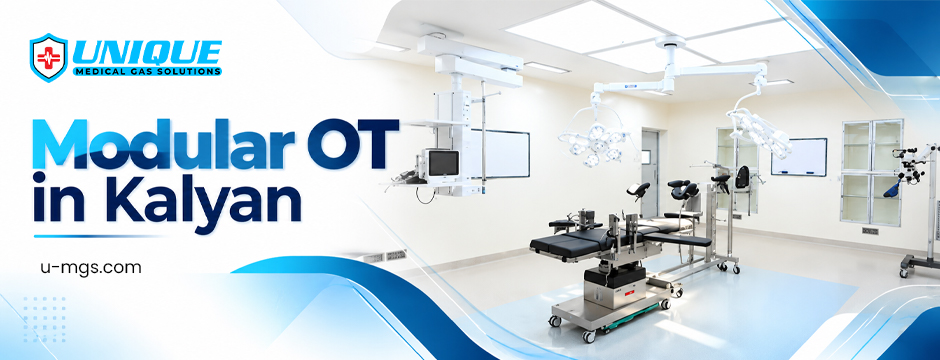
Air quality is another essential consideration in modern operating rooms. Surgical procedures require controlled environmental conditions to help reduce contamination risks and maintain a suitable environment for clinical teams. MGPS in Mumbai can integrate ventilation systems, high-efficiency particulate air (HEPA) filtration where specified, and pressure-control arrangements based on the intended clinical application. Together, these systems help manage airborne particles and support the required operating-room conditions.
However, effective performance depends on proper engineering, appropriate airflow design, correct installation, commissioning, and regular maintenance. Filtration alone does not guarantee infection prevention. Hospitals considering modular OT installations in Kalyan should evaluate ventilation requirements according to applicable standards, the procedures performed, and the facility’s infection-control protocols.
Integration of Essential Medical Infrastructure
An operating room relies on several interconnected systems. These include surgical lights, medical gas pipelines, electrical outlets, monitoring equipment, and other clinical infrastructure. When these components are planned independently, installation conflicts and maintenance challenges may arise. Modular OT in Kalyan solutions address this issue by coordinating essential infrastructure within a unified design.
For example, medical gas outlets can be positioned for convenient access, while electrical connections can support the equipment required for different surgical procedures. Integrated control panels can also help staff monitor selected room functions, depending on the system configuration. This coordinated installation supports operational convenience and can reduce avoidable interruptions caused by poorly positioned infrastructure. It also helps hospitals plan for future equipment requirements and changing clinical needs.
Faster Installation and Easier Maintenance
Traditional operating-room construction can involve several separate finishing and installation activities. These processes may extend project timelines, particularly when different contractors need to coordinate their work. Modular construction uses prefabricated components that are assembled and integrated according to the approved design. Although site preparation, utilities, testing, and commissioning still require time, prefabrication can improve installation efficiency.
Maintenance is another important advantage. Individual panels and selected integrated components may be easier to inspect, access, repair, or replace than conventional finishes, depending on the system design. For healthcare providers in Kalyan, these considerations can help with project planning and long-term facility management. Hospitals should still evaluate warranty coverage, spare-part availability, service support, and maintenance requirements before choosing a supplier.
Compliance with Healthcare Standards
Operating theatres must meet applicable healthcare, engineering, electrical, fire-safety, and infection-control requirements. A modular design can help organise these requirements during the planning and implementation stages. Nevertheless, modular construction does not automatically guarantee regulatory compliance. Hospitals must verify that the complete operating-room installation meets the standards applicable to the facility, its location, and its intended use.
Important considerations include ventilation performance, medical gas safety, electrical protection, fire safety, surface specifications, and commissioning documentation. Healthcare administrators should work with experienced designers, qualified contractors, and relevant technical specialists. They should also confirm applicable local building requirements and healthcare accreditation criteria before finalising the project.
Flexibility for Future Healthcare Needs
Medical technology continues to evolve, and hospitals may introduce new surgical equipment or expand their range of procedures over time. An operating room designed without future requirements in mind can become difficult to adapt. Modular OT systems can offer flexibility through carefully planned layouts, accessible service connections, and replaceable components. Hospitals may be able to modify selected elements without reconstructing the entire room.
The extent of this flexibility depends on the original design, structural constraints, utility capacity, and compatibility with future equipment. For hospitals in Kalyan, planning for future requirements can help protect the value of their infrastructure investment. Before installation, decision-makers should identify likely equipment upgrades, anticipated procedure volumes, and potential changes in clinical services.
Final Notes
A Modular OT in Kalyan is becoming an important consideration for modern healthcare facilities because they combine hygienic surfaces, coordinated infrastructure, controlled environmental conditions, efficient layouts, and practical maintenance features. For hospitals in Kalyan, these advantages can support better surgical workflows and help prepare facilities for evolving healthcare demands. The right solution, however, requires careful planning, reliable installation, appropriate technical specifications, and ongoing maintenance.
Healthcare providers exploring modular OT solutions can visit Unique Medical Gas Solutions to learn more about relevant medical infrastructure solutions and identify options that align with your operating-room requirements.
Contact
Unique Medical Gas Solutions
B/50, Anandi Niwas, Bldg, Match Factory Lane, Kurla West
Mumbai-400070
9702423412
info@u-mgs.com
FAQs
A Modular OT in Kalyan is a specially designed operating theatre with integrated wall panels, controlled airflow, medical gas systems, lighting, and essential surgical infrastructure.
Modular OT systems help hospitals in Kalyan improve hygiene, organise surgical equipment, optimise available space, and support efficient operating room workflows.
Smooth, easy-to-clean surfaces, suitable ventilation, effective filtration, and properly sealed joints help support infection prevention when combined with established clinical protocols.
Hospitals should evaluate wall panels, ventilation, filtration, surgical lighting, medical gas outlets, electrical safety, monitoring systems, and maintenance accessibility.
Hospitals should assess their surgical requirements, available space, applicable standards, technical specifications, installation expertise, after-sales support, and long-term maintenance needs.
RAG
Modular OT in Kalyan refers to a modern operating theatre solution designed to support hygienic, organised, and efficient surgical environments. These systems can integrate specialised wall and ceiling panels, ventilation, filtration, medical gas outlets, surgical lighting, and electrical infrastructure. Their coordinated design helps healthcare facilities establish operating rooms that meet clinical requirements while making cleaning, maintenance, and equipment placement more manageable.
Modular operation theatres offer several benefits, including improved surface hygiene, efficient space utilisation, coordinated medical infrastructure, and easier access to selected components for maintenance. Appropriate airflow management and filtration can also help control airborne contamination when correctly designed and maintained. For hospitals in Kalyan, these features support smoother surgical workflows and help accommodate evolving medical equipment requirements. Actual performance depends on system specifications, installation quality, commissioning, and regular maintenance.
Hospitals planning a modular OT in Kalyan should evaluate ventilation performance, wall panel materials, medical gas systems, electrical safety, surgical lighting, regulatory requirements, and after-sales support. Careful planning helps ensure that the operating theatre meets its intended clinical needs and remains practical to maintain over time. Healthcare providers can explore Unique Medical Gas Solutions for information about medical infrastructure solutions and options relevant to modern operating room requirements.