Laminar Airflow OT in Mumbai Maharashtra Improves Air Quality
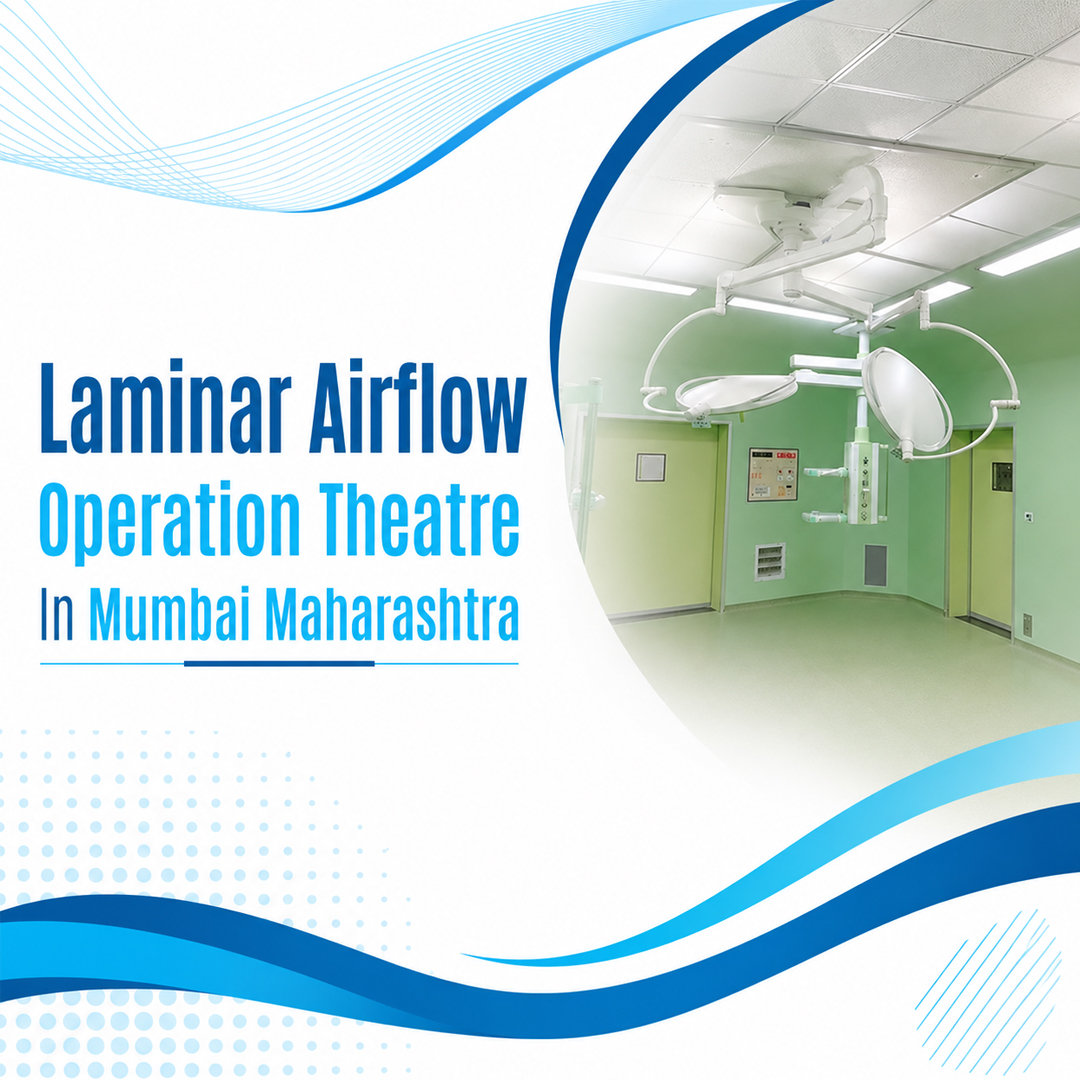
A modern operating theatre needs more than sterile instruments and trained medical professionals. The quality of air surrounding the surgical field also plays an important role in maintaining a controlled clinical environment. A laminar airflow operation theatre in Mumbai Maharashtra uses carefully designed airflow, filtration, pressure control and ventilation to reduce airborne particles around the operating area.
By delivering highly filtered air in a controlled, unidirectional pattern, the system helps move contaminants away from critical zones. This is particularly valuable for hospitals performing complex, prolonged or implant-related procedures where maintaining a clean operating environment is a key infection-control consideration. Indian infection-control guidelines also emphasise HEPA filtration, positive pressure and adequate air changes in operating theatres.
What Is a Laminar Airflow Operating Theatre?
A laminar airflow operating theatre is an engineered environment designed to deliver clean, HEPA-filtered air in a predominantly unidirectional flow over or around the surgical field. Unlike conventional airflow patterns that mix room air, laminar systems aim to sweep airborne particles away from the critical operating zone.
The National Guidelines for Infection Prevention and Control in Healthcare Facilities describe laminar airflow as HEPA-filtered air delivered in a unidirectional pattern to minimise contamination of the surgical field. For hospitals in Mumbai, where operating theatres may need to function continuously across different surgical specialities, properly engineered airflow can become an important component of the overall HVAC and infection-control strategy.
HEPA Filtration Removes Fine Airborne Particles
One of the most important components of a laminar airflow system is the HEPA filter. People continuously shed tiny skin particles, and these particles can carry microorganisms. In an operating theatre, airborne particles may eventually settle on equipment, surfaces or the surgical field. India’s national infection-control guidelines specifically identify appropriately circulated, clean filtered air as a method of removing airborne organisms from the operating environment.
National guidance describes HEPA filters as capable of filtering particles down to approximately 0.3 microns with high efficiency. When combined with controlled airflow, this filtration helps create a cleaner environment around the operating table.
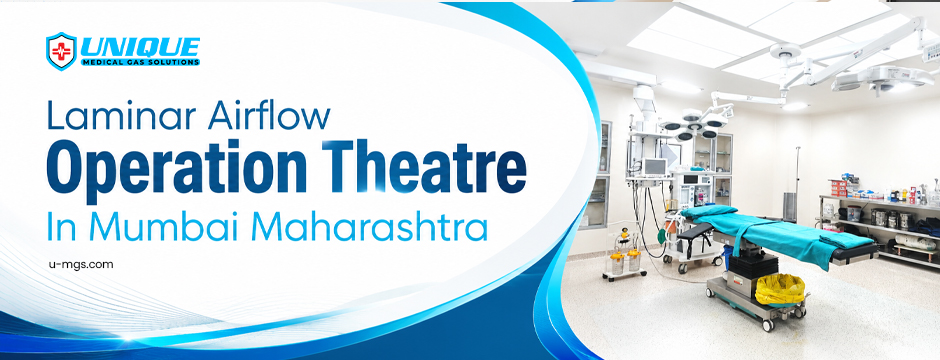
Unidirectional Airflow Helps Protect the Surgical Zone
The defining feature of laminar airflow is its controlled direction. Clean air is introduced through specially designed ceiling or airflow units and moves in a consistent direction toward the operating area and exhaust points. The objective is to prevent unnecessary turbulence and carry airborne contaminants away from the critical zone.
Research describing operating-theatre airflow explains that unidirectional airflow can move particle-free air over the aseptic operating field and sweep particles away from the surgical area. For a Modular OT in Maharashtra, this controlled movement is particularly useful when designing environments for procedures where minimising airborne contamination is a priority.
Positive Pressure Reduces Outside Air Infiltration
Air quality inside an operating theatre is also influenced by what enters from surrounding areas. A properly designed OT generally maintains positive pressure compared with adjoining spaces. This means air tends to move outward when doors or other openings are disturbed rather than allowing less-clean corridor air to flow inward.
Indian infection-control guidance recommends pressure gradients that move air from cleaner zones toward less-clean areas. The CDC similarly recommends maintaining operating rooms at positive pressure relative to corridors and adjacent areas. This pressure relationship can therefore work alongside HEPA filtration and directional airflow to support a controlled operating environment.
Controlled Air Changes Dilute Contaminants
Air changes per hour (ACH) indicate how frequently the volume of air within a room is replaced or circulated through the ventilation system. Indian national guidelines recommend 20 air changes per hour for an operating theatre, highlighting the importance of adequate ventilation for controlling airborne contamination.
A well-designed Laminar OT in Mumbai Maharashtra, therefore does not rely solely on filtration. It integrates airflow volume, filtration, pressure, supply distribution and exhaust arrangements. For hospitals planning or upgrading an operating theatre in Mumbai, these factors should be considered together rather than treating the laminar airflow ceiling as an independent installation.
Better Control of Temperature and Humidity
Air quality is not limited to visible dust or microorganisms. Temperature and humidity also affect the operating-room environment. Indian guidelines recommend controlled temperature and humidity conditions in operating theatres, while emphasising central air-conditioning rather than conventional window air-conditioning systems.
Maintaining suitable environmental conditions can help provide greater comfort for surgical teams while supporting infection-control objectives. A properly engineered HVAC system can continuously monitor and regulate these parameters according to the requirements of the facility and procedure. This is especially relevant in Mumbai, where seasonal weather conditions can create substantial differences in ambient temperature and humidity.
Helps Minimise Airborne Contamination Around Critical Areas
The primary advantage of Modular OT in Mumbai is the ability to create a cleaner air envelope around the surgical field.
The system works through multiple stages:
- Air is processed through the HVAC system.
- Appropriate filtration removes airborne particulate matter.
- HEPA filtration provides high-efficiency particle removal.
- Clean air enters through strategically positioned diffusers.
- Unidirectional airflow moves across the critical zone.
- Contaminated air is directed toward exhaust points.
- Positive pressure helps restrict unwanted infiltration from adjacent areas.
This creates a controlled airflow pathway instead of allowing contaminants to circulate randomly throughout the room.
However, laminar airflow should be viewed as one part of infection prevention, not a replacement for surgical discipline, sterilisation, cleaning, appropriate protective clothing or controlled access. Research in Indian operating theatres has found that environmental and behavioural factors—including temperature, humidity, fresh-air percentage, door opening, controlled entry and OT attire—can all influence microbiological air quality.
Particularly Relevant for Specialised Surgical Procedures
Certain procedures require especially careful control of the operating environment. Indian national guidance notes that laminar airflow systems may be considered for prolonged procedures such as transplant, replacement, neurosurgical, orthopaedic and implant surgeries.
A hospital therefore needs to evaluate the type of surgery performed, room size, airflow requirements, equipment placement, occupancy, HVAC capacity and infection-control protocols before selecting a system. The design should also ensure that surgical lights, equipment, staff movement and other physical obstructions do not unnecessarily disrupt the intended airflow pattern.
Regular Monitoring Is Essential
Installing a laminar airflow system is only the beginning. Its performance needs to be maintained over time. HEPA filters require regular inspection and efficiency monitoring, and should be replaced when necessary. Airflow, pressure differentials, temperature, humidity and ventilation performance should also be checked according to the hospital’s maintenance and infection-control protocols.
AIIMS Jodhpur’s infection-control manual, for example, identifies commissioning of laminar-flow operating rooms, HEPA filter maintenance and suspected environmental problems among situations where targeted air surveillance may be appropriate. Regular preventive maintenance helps ensure that the system continues delivering the intended air quality rather than simply functioning as an installed HVAC fixture.
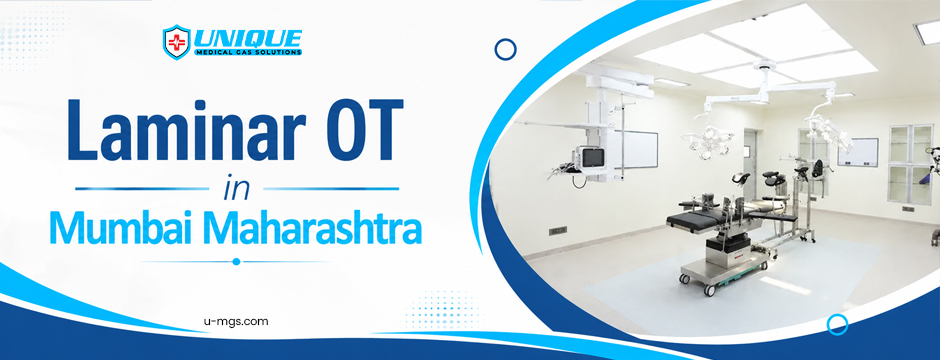
Why Proper Design Matters in Mumbai Hospitals
Mumbai hospitals operate in a demanding urban environment, making appropriate HVAC design especially important. External environmental conditions, hospital occupancy, traffic between adjoining areas and the operational requirements of busy surgical departments can all influence indoor air management.
A laminar airflow operation theatre in Mumbai Maharashtra should therefore be designed according to the specific hospital’s requirements instead of relying on a generic configuration.
Important considerations include:
- OT dimensions and ceiling height
- Surgical table location
- HEPA filtration requirements
- Air change rate
- Positive pressure requirements
- Supply and exhaust positioning
- Temperature and humidity control
- Equipment and lighting placement
- Access and door movement
- Filter monitoring and maintenance
- Validation and commissioning procedures
A coordinated design ensures that airflow performance supports the entire operating-room environment.
Laminar Airflow Works Best as Part of a Complete Infection-Control Strategy
It is important to maintain realistic expectations about laminar airflow. Although the technology can reduce particulate and microbial loads in the surgical working area, evidence does not establish that laminar airflow alone reduces surgical-site infections across every type of procedure. The CDC notes that laminar airflow has been proposed as an adjunct measure, while its overall effect on SSI risk remains inconclusive.
The WHO’s global SSI guidelines also recommend against using laminar airflow specifically to reduce SSI risk in total hip or knee arthroplasty, citing low- to very-low-quality evidence. Therefore, hospitals should integrate laminar airflow with proven infection-control practices, including sterilisation, environmental cleaning, appropriate staff attire, hand hygiene, controlled access and proper surgical protocols.
Bottom Line
A laminar airflow operation theatre in Mumbai Maharashtra can significantly improve control over the operating-room environment by combining HEPA filtration, unidirectional airflow, positive pressure, ventilation and environmental monitoring. Its biggest value lies in controlling airborne particles around critical surgical areas and supporting a carefully managed sterile environment.
However, effective OT air quality depends on complete system design, commissioning, maintenance and staff compliance—not airflow technology alone. Hospitals and healthcare facilities looking for professionally designed solutions can explore Unique Medical Gas Solutions for specialised hospital and operating-theatre infrastructure solutions.
FAQs
A laminar airflow operation theatre in Mumbai Maharashtra is a specially designed surgical environment that uses highly filtered air and controlled, unidirectional airflow to reduce airborne particles around critical surgical areas.
Laminar airflow improves air quality by passing air through HEPA filters and directing the cleaned air in a controlled pattern. This helps reduce airborne particulate contamination and move contaminants away from the surgical zone.
HEPA filtration is important because it efficiently removes very small airborne particles from the air supplied to the operating room. It forms an important component of a controlled OT ventilation system.
No. Laminar airflow should complement, rather than replace, infection-control practices such as sterilisation, hand hygiene, environmental cleaning, appropriate OT attire, controlled access and proper surgical protocols.
Professional design helps ensure that airflow, filtration, pressure, ventilation, temperature, humidity and equipment placement work together effectively. This is important for creating a controlled operating environment suited to the hospital’s specific requirements.
RAG
Reason: Airborne contaminants can affect the cleanliness of critical surgical zones.
Action: Laminar airflow systems use HEPA filtration and controlled, unidirectional airflow to supply highly filtered air while directing contaminants away from the surgical field.
Goal: The objective is to maintain consistent operating-room air quality and support the hospital’s broader infection-control protocols.
Reason: Uncontrolled infiltration from corridors or adjacent rooms can introduce less-clean air into the OT.
Action: A properly engineered system combines positive pressure, appropriate air changes, strategically positioned air-supply units and suitable exhaust arrangements.
Goal: These measures help maintain a controlled airflow pathway and create an environment better suited to demanding surgical procedures.
Reason: Filters, airflow performance, pressure levels and environmental conditions can change over time.
Action: Hospitals should implement regular inspection, preventive maintenance, filter monitoring, airflow validation and environmental checks.
Goal: Consistent maintenance helps the system continue performing according to its intended design while supporting the hospital’s overall standards for a controlled surgical environment.