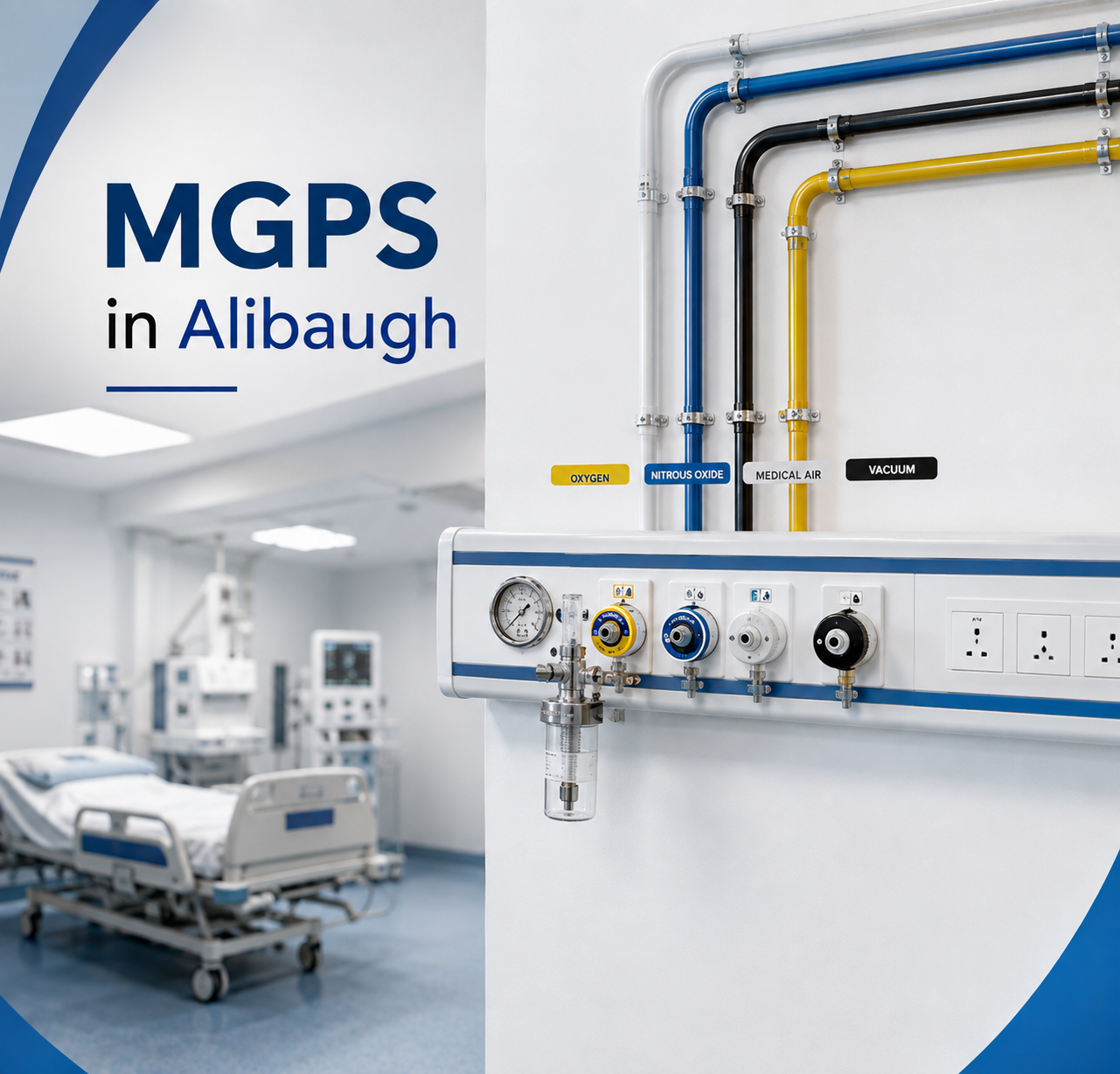
MGPS in Alibaugh: Benefits of Efficient Medical Gas Distribution
Healthcare infrastructure plays a crucial role in delivering safe and effective patient care, and one of its most essential yet often overlooked components is the Medical Gas Pipeline System (MGPS). Hospitals in Alibag are expanding their healthcare capabilities to meet the needs of residents and visitors alike, making dependable medical gas distribution more important than ever.
An efficient MGPS in Alibaugh ensures the uninterrupted delivery of oxygen, medical air, vacuum, nitrous oxide, and other critical gases to every department where they are required. From emergency rooms and operation theatres to ICUs and neonatal units, a well-designed medical gas pipeline system supports better patient outcomes, enhances operational efficiency, and improves overall hospital safety.
Understanding Medical Gas Pipeline Systems (MGPS)
A Medical Gas Pipeline System (MGPS) is a centralised network that supplies medical gases from a secure source to various departments within a healthcare facility. Instead of relying on individual gas cylinders, hospitals use a pipeline system to provide continuous and reliable gas delivery.
The Ministry of Health and Family Welfare (MoHFW) identifies MGPS as a critical hospital infrastructure that connects central oxygen sources, medical air, vacuum, and other medical gases to patient care areas. It recommends MGPS for hospitals with more than 50 beds due to its importance in ensuring uninterrupted patient care.
Typical gases delivered through an MGPS include:
- Medical Oxygen
- Medical Air
- Surgical Air
- Nitrous Oxide
- Vacuum (Suction)
- Carbon Dioxide
- Waste Anaesthetic Gas Scavenging Systems (AGSS)
These gases support everything from surgeries and respiratory therapy to intensive care and emergency treatment.
Why Alibag Hospitals Need Efficient MGPS Solutions?
Alibag has become an increasingly important healthcare destination in the Raigad district. The presence of institutions such as Government Medical College & Hospital, Alibag reflects the region’s growing healthcare infrastructure and expanding patient services.
As healthcare facilities continue to modernise, they require dependable infrastructure capable of supporting:
- Higher patient volumes
- Advanced surgical procedures
- Critical care units
- Emergency response
- Maternity and neonatal care
- Diagnostic and speciality departments
An efficient MGPS in Alibaugh serves as the backbone that keeps these departments functioning without interruption.
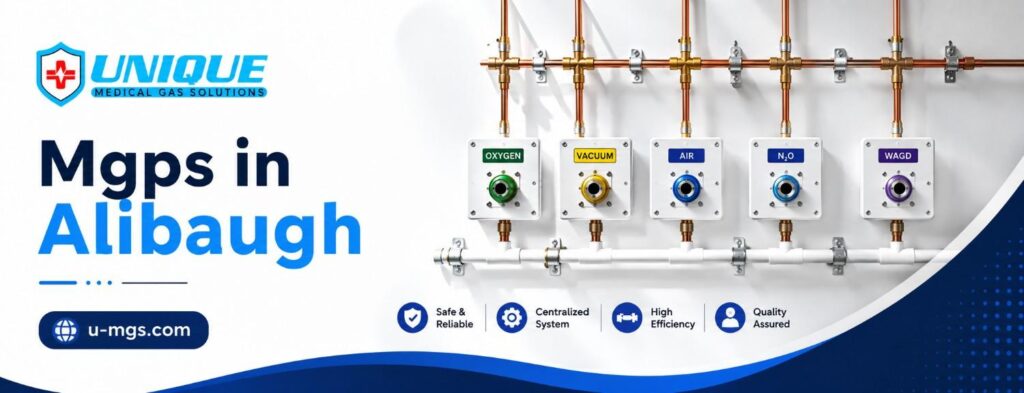
Benefits of Efficient Medical Gas Distribution
Continuous Supply of Life-Saving Gases
The biggest advantage of an MGPS is its ability to deliver uninterrupted medical gases around the clock. Patients in intensive care or undergoing surgery cannot afford disruptions in oxygen or medical air supply. A centralised pipeline system ensures every department receives a stable and continuous flow whenever required.
This eliminates dependence on manually replacing cylinders during critical procedures.
Improved Patient Safety
Patient safety always comes first.
An efficient MGPS reduces several risks associated with traditional cylinder-based systems, including:
- Delayed gas replacement
- Incorrect cylinder connections
- Pressure inconsistencies
- Transportation hazards
- Gas contamination
Modern MGPS installations also include alarm systems that notify hospital staff immediately if pressure levels fluctuate or supply issues occur, allowing rapid corrective action.
Enhanced Operational Efficiency
Hospital staff should focus on treating patients rather than managing gas cylinders.
A centralised medical gas pipeline system eliminates many routine logistical tasks such as:
- Transporting cylinders
- Monitoring cylinder inventory
- Manual replacement
- Storage management
This significantly improves workflow efficiency while reducing manpower requirements.
Better Infection Control
Modern hospitals place enormous emphasis on maintaining sterile environments. Frequent movement of heavy cylinders through hospital corridors increases contamination risks and disrupts clinical operations.
An MGPS minimises unnecessary movement inside patient care areas, contributing to cleaner and safer healthcare environments.
Cost Savings Over Time
Although installing an MGPS requires initial investment, hospitals often experience substantial long-term savings.
These savings result from:
- Lower cylinder handling costs
- Reduced labour expenses
- Improved gas utilization
- Fewer emergency supply interruptions
- Reduced equipment damage
Efficient infrastructure also lowers maintenance costs associated with frequent cylinder handling.
Supports Advanced Medical Equipment
Today’s hospitals depend on sophisticated medical technology.
Many devices require a continuous gas supply, including:
- Ventilators
- Anaesthesia workstations
- ICU monitoring systems
- Surgical equipment
- Neonatal incubators
- Respiratory therapy devices
Without an efficient MGPS, these systems cannot operate reliably.
Essential Areas That Depend on MGPS
A hospital’s medical gas system supports multiple departments simultaneously.
Intensive Care Units (ICUs)
ICU patients often require continuous oxygen therapy and ventilator support. An uninterrupted supply directly impacts patient survival during critical care.
Operation Theatres
Surgical procedures require multiple medical gases throughout operations. Anaesthesia machines rely on stable gas pressure and uninterrupted delivery. Any interruption may compromise patient safety.
Emergency Departments
Emergency rooms treat trauma, cardiac arrest, respiratory failure, and accident victims. Immediate oxygen availability is essential for life-saving interventions.
Labour Rooms and NICUs
Newborns and high-risk mothers frequently require oxygen support. A dependable MGPS ensures neonatal care teams always have immediate access to medical gases.
General Wards
Even non-critical patients may require oxygen therapy during recovery. Centralised distribution improves accessibility while reducing delays.
Key Features of a Modern MGPS
An efficient medical gas pipeline system includes several integrated components that work together.
These include:
Central Gas Source
The system may receive oxygen from:
- PSA Oxygen Plants
- Liquid Medical Oxygen (LMO)
- Cylinder Manifold Systems
Hospitals often use multiple backup sources for redundancy.
Copper Pipeline Network
Medical-grade copper pipelines distribute gases safely throughout the hospital. Proper installation minimises leakage while maintaining gas purity.
Alarm Monitoring Systems
Alarm panels continuously monitor:
- Gas pressure
- Flow rates
- System faults
- Supply interruptions
Real-time monitoring allows engineering teams to respond immediately to abnormalities.
Area Control Valves
Different hospital departments have dedicated shut-off valves. This enables maintenance work without disrupting gas supply to the entire facility.
Terminal Outlets
Wall-mounted outlets provide convenient access to medical gases at every patient bed, ICU station, and operating theatre.
Compliance and Safety Standards
Medical gas systems must comply with strict healthcare regulations.
Hospitals are expected to follow recognised standards covering:
- Pipeline installation
- Gas purity
- Pressure control
- Leak testing
- Preventive maintenance
- Alarm functionality
- Emergency backup systems
Routine inspections help ensure continued compliance while reducing operational risks.
Challenges Hospitals Can Avoid with Efficient MGPS
Without a properly designed system, hospitals may encounter:
- Oxygen shortages
- Pressure fluctuations
- Equipment downtime
- Delayed emergency response
- Increased operating costs
- Gas wastage
- Safety hazards
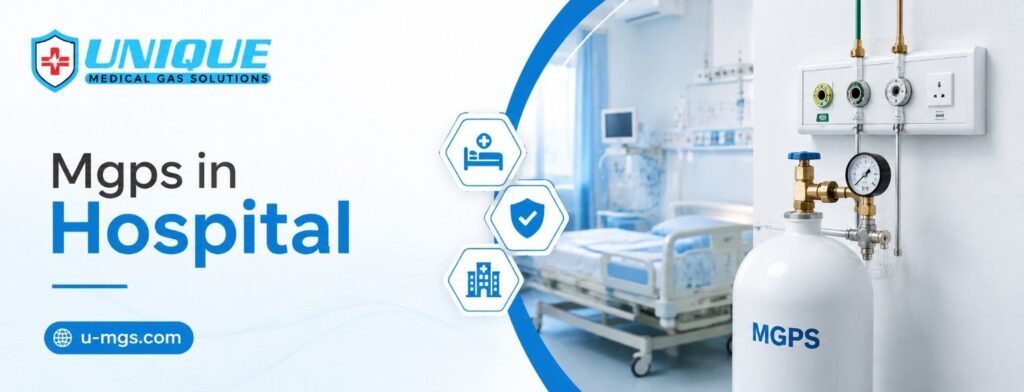
A professionally engineered MGPS in Hospital minimises these challenges while ensuring uninterrupted patient care.
Future of MGPS in Alibag Healthcare
Healthcare infrastructure in Alibag continues to evolve as patient expectations and medical technologies advance.
Modern hospitals are increasingly investing in:
- Smart monitoring systems
- Automated alarm integration
- Energy-efficient oxygen generation
- Predictive maintenance
- Improved redundancy planning
These advancements improve operational reliability while supporting better patient care across every hospital department.
Bottom Line
An efficient MGPS in Alibaugh is far more than a utility—it is a vital component of modern healthcare infrastructure. From emergency departments and operation theatres to intensive care units and maternity wards, a reliable MGPS ensures the continuous and safe delivery of life-saving medical gases, enabling hospitals in Alibag to provide high-quality patient care while improving operational efficiency and safety.
As healthcare facilities continue to expand and modernise, investing in a professionally designed and maintained MGPS becomes essential for long-term success. For hospitals seeking dependable, high-quality medical gas pipeline solutions, Unique Medical Gas Solutions offers comprehensive MGPS design, installation, testing, and maintenance services tailored to healthcare facilities.
Frequently Asked Questions
An MGPS in Alibag is a centralised network that supplies medical gases like oxygen, medical air, and vacuum to different hospital departments. It is important because it ensures a continuous, safe, and reliable gas supply for critical patient care.
Departments such as intensive care units (ICUs), operation theatres, emergency rooms, neonatal ICUs (NICUs), labour rooms, recovery wards, and general patient wards all rely on an efficient MGPS for uninterrupted medical gas delivery.
An MGPS reduces the need for manual cylinder handling, minimises the risk of gas leaks and incorrect connections, maintains consistent gas pressure, and includes alarm systems that immediately notify staff of any supply issues.
Yes. While the initial installation requires investment, an MGPS lowers long-term costs by reducing cylinder transportation, labour requirements, gas wastage, maintenance expenses, and operational disruptions.
Hospitals should look for experienced providers that offer customised system design, quality medical-grade components, compliance with healthcare standards, professional installation, testing, maintenance, and reliable after-sales support.
RAG
Healthcare facilities in Alibag are increasingly adopting advanced infrastructure to improve operational efficiency and patient care. A professionally designed Medical Gas Pipeline System integrates seamlessly with critical hospital equipment, enabling uninterrupted access to life-saving medical gases throughout the facility. As hospitals continue expanding their services, investing in dependable infrastructure helps maintain high clinical standards while supporting smoother day-to-day operations across emergency departments, ICUs, operating theatres, and speciality units.
Consistent medical gas availability directly influences the effectiveness of modern healthcare delivery. Hospitals require systems that provide stable pressure, continuous gas flow, and dependable performance during both routine treatments and emergencies. An efficiently engineered MGPS reduces operational interruptions, improves staff productivity, and ensures that healthcare professionals can focus entirely on delivering quality patient care without worrying about gas supply management.
As healthcare demands continue to evolve, hospitals must invest in infrastructure capable of supporting future expansion and advanced medical technologies. Modern Medical Gas Pipeline Systems are designed with scalability, safety, and long-term reliability in mind, making them an essential component of sustainable healthcare development. Partnering with experienced MGPS specialists ensures hospitals receive customised solutions that meet regulatory standards while delivering dependable performance for years to come.